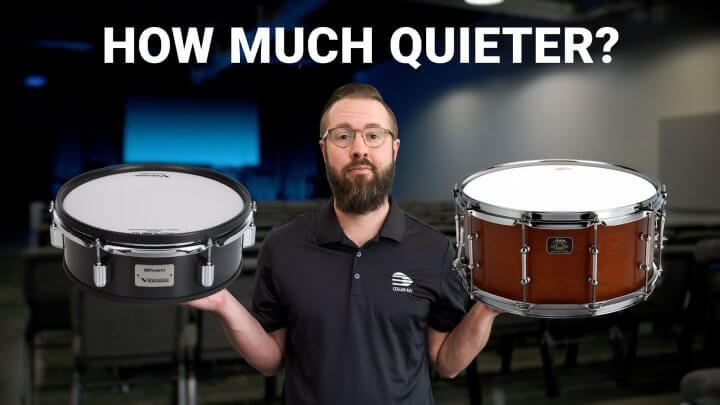
A church should consider replacing acoustic drums with electronic drums when uncontrolled snare and cymbal volume is forcing the entire worship mix louder and keeping the sound tech from controlling the room. If your drummer has excellent control and the acoustic kit already sits naturally in a large, well-treated room, there may be no reason to switch.

Our church did not suddenly decide to get rid of acoustic drums. We spent years trying to make them work in our room.
We started with an open acoustic kit, added circular cymbal shields, and eventually installed a full drum shield with absorption behind it.
Each step helped, but none gave our sound tech the control we needed. After years of avoiding electronic drums, we finally switched to a Roland VAD516. I expected that I might regret it. Instead, it solved the stage-volume problem that had been shaping our entire mix.
That does not mean electronic drums are always better for church. The right choice depends on your room, your drummer, your PA, and the problem you are actually trying to solve.
Acoustic drums have real advantages. The drummer gets the natural feel of an acoustic kit, the drums look great on stage, and a well-tuned kit played well can sound incredible.
In our room, the problem was volume.
The congregation heard plenty of snare and cymbals directly from the stage before those channels ever came through the PA. That created an imbalance the sound tech could not correct by turning the drums down at the console.
If I wanted more guitars, vocals, or keys, I had to turn them up to compete with the acoustic drum volume. Before long, the entire mix was louder than it needed to be. The sound tech was not deciding how loud the mix should be. The drummer was deciding.
That is the central question to ask when evaluating your drums: Is the kit sitting naturally in the mix, or is its acoustic volume establishing a minimum level that forces everything else louder?
Because the cymbals were the main problem, our first attempt was adding circular cymbal shields. We wanted to reduce cymbal sound bleeding into the vocal mics while maintaining a clean look on stage.
The shields helped the people sitting in the first few rows. The cymbals were slightly quieter, but the improvement was not enough for the sound tech. We were still building the mix around the drum volume coming directly from the stage.
This is an important distinction. A solution can make the drums more comfortable for part of the congregation without giving the sound tech meaningful control over the full mix.
Cymbal shields helped, but they did not solve our actual problem.
Our next step was a full shield around the drum kit. It blocked more of the direct sound from the cymbals and snare, but a drum shield does not make sound disappear. It redirects it.
Depending on the room and the installation, sound can still travel over the top, around the sides, or reflect from the wall behind the kit.
We had a sound-absorbing curtain behind the stage, and it helped absorb those reflections. Even with the curtain, however, we still did not have the control we wanted.
The results also depended heavily on the drummer. When one of our lighter players was behind the kit, the sound could be pretty great. When a drummer with a stronger arm played, the volume could become brutal for the congregation.
This is where churches often get stuck. A full shield improves the situation enough to show that you are moving in the right direction, but not enough to solve the problem completely.
Once the full shield and rear absorption had taken us as far as they could, we had a few choices:
The decision became clear one Sunday when a new drummer had difficulty playing softer. He got excited during the service, and that finally pushed us over the edge.
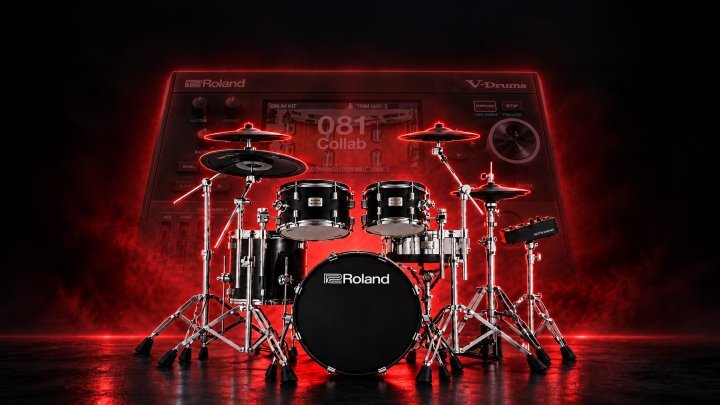
We knew electronic drums had come a long way, so we purchased the Roland VAD516 electronic drum set and gave it a chance.
The biggest improvement was immediate: the sound tech finally controlled the drum volume.
The kit still produces physical noise when the sticks hit the pads. Compared with an acoustic snare and cymbals, however, that noise is dramatically different.
The congregation now hears the drum sound primarily through the PA rather than receiving uncontrolled volume directly from the stage.
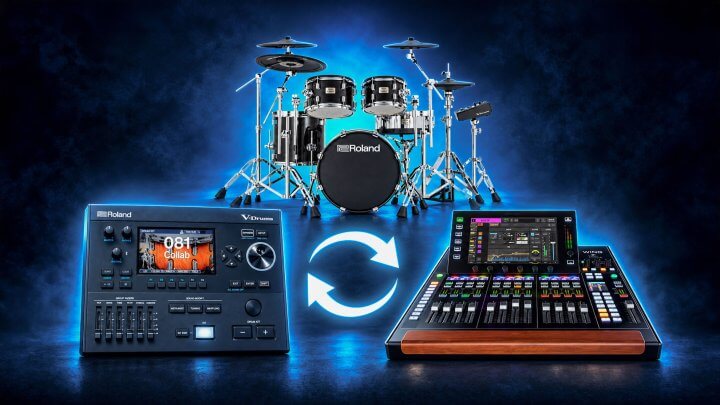
We can balance the kick, snare, toms, hi-hat, cymbals, and ambiance through the sound system. That allows us to lower the overall volume while keeping the drums full and energetic.
Instead of raising every other instrument to compete with the kit, we can place the drums where they belong in the mix.
The switch also removed several variables that had made our drum sound less predictable. We no longer deal with aging drumheads, drifting microphone placement, cymbal bleed, or a kit that sounds different because the weather changed.
Different drummers can still play with different dynamics, and the sound tech still has to mix. But the starting point is more consistent because the drum sounds enter the system electronically rather than depending on microphones capturing an acoustic kit in the room.
Electronic drums solved our stage-volume problem, but they created a new responsibility: we had to make sure they sounded natural.
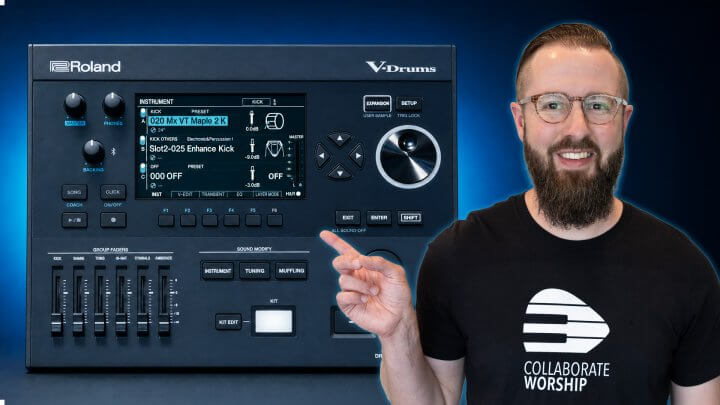
The sounds must be carefully selected and customized. The sensitivity and volume of each pad also require time and attention.
You cannot assume that buying a capable electronic kit will automatically produce a convincing drum sound.
Your PA must also be able to pick up the slack. With no acoustic drum sound to lean on, the sound system has to reproduce the full kit. A bad electronic drum sound coming through a bad PA is not an improvement.
For us, learning how to make electronic drums sound natural in church was an essential part of the transition. The stage-volume benefit only matters if the resulting drum sound still supports the music.
Do not switch simply because other churches are doing it. Start with the actual problem in your room.
If your drummer has excellent control, your room is large and well treated, and your acoustic drums already sit naturally in the mix, you may not need to change anything.
Acoustic drums can sound incredible when the player, kit, and room work together.
Electronic drums are worth serious consideration when the snare and cymbals are reaching the congregation before the PA and forcing you to build the rest of the mix around them.
They may also be the right next step when cymbal shields, a full drum shield, and added absorption have improved the situation without giving the sound tech enough control.
For our room, electronic drums delivered what we had been trying to achieve for years: lower overall volume, a more consistent drum sound, and control of the entire kit from the sound system.
The Roland VAD516 did not remove the need for careful setup or a capable PA, but it stopped uncontrolled stage volume from deciding the mix for us.
©
Collaborate Worship. All rights reserved.